
 EN
EN
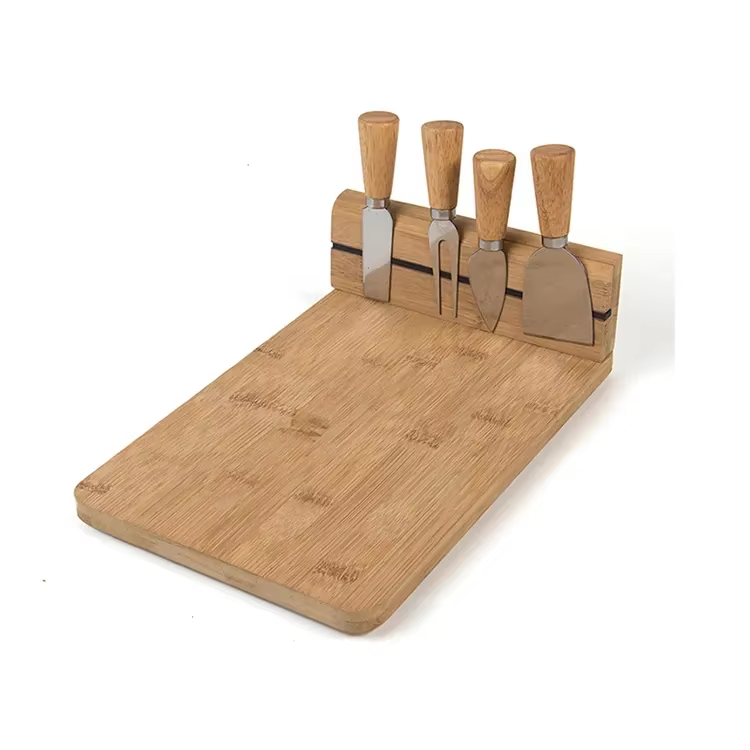
Natural Aesthetic Appeal of Bamboo Cheese Board
Warm Tone, Organic Grain Patterns, and Texture Enhancing Visual Sophistication
The warm golden amber color of bamboo turns ordinary cheese boards into something special, almost like natural works of art. Every single board has unique grain patterns - some with swirling designs, others with straight lines - that give them a depth no plastic or composite material could ever match. The texture isn't just pretty though. It actually helps keep cheese from sliding around when serving guests at parties or events. Compared to boring old slate or plain wood surfaces, bamboo plays with light in interesting ways because of how its fibers vary across the surface. This creates nice little shadows and highlights that make whatever is placed on top look better arranged. People seem to notice this too. According to a survey done by Culinary Surface Trends, nearly four out of five hospitality workers say their customers think food tastes more expensive when it's served on bamboo boards instead of other materials.
Oil-Finished vs. Matte-Sealed Surfaces: Balancing Photo-Ready Sheen and Tactile Authenticity
When it comes to finishing surfaces for food styling, most professionals face a choice between two main options. On one hand there's oil rubbed surfaces which give that shiny, eye catching look perfect for photos. The oil soaks into the material and makes everything sparkle under lights, especially useful when trying to get attention on social media platforms. Some studies suggest this can actually make people stare at images longer, maybe around 40% according to Food Styling Journal from last year. But keep in mind these need regular maintenance, probably once a month to stay looking good. Matte sealed boards present another approach altogether. They have this nice soft feel that doesn't reflect light as much, letting the natural grain of bamboo show through better. Plus they handle moisture really well without feeling fake or plastic-y. For those working in studios with controlled lighting conditions, oil finishes still work best. But if shooting outside or anywhere with natural sunlight, going with matte is smarter since it cuts down on unwanted glare and keeps textures looking authentic.
| Finish Type | Visual Impact | Maintenance Needs | Ideal Use Case |
|---|---|---|---|
| Oil-Rubbed | High sheen, depth | Monthly renewal | Photography, dim lighting |
| Matte-Sealed | Natural, non-reflective | Annual resealing | Daylight, textured foods |
Functional Design Elements Optimized for Cheese and Charcuterie Presentation
Optimal Dimensions (12" � 18") and Proportional Layouts for Balanced Food Grouping
A standard size of around 12 by 18 inches works really well for putting together a nice charcuterie board, allowing space for about four to six different sections without feeling cramped. This dimension actually follows something called the rule of thirds, which means arranging things in triangles helps the eyes move comfortably over the whole arrangement. Leaving roughly an inch and a half gap between items does two important things: it stops flavors from mixing too much and creates empty spaces that make each component stand out more clearly on the board. Most experienced people who set these boards up know this spacing trick makes all the difference when presenting cured meats, cheeses, and accompaniments.
Juice Grooves and Rounded Edges: Practical Containment Without Visual Disruption
There's a subtle 1/4 inch deep juice groove that goes all around the edge, catching those pesky drips from soft cheese slices and cured meats without messing up the clean look of the board. No need for those big ugly reservoirs here since the channel is built right into the surface below where it doesn't break up the visual flow. The edges are rounded at about 45 degrees too, so they won't catch on tablecloths or napkins, plus they make nice places to grip when moving things around. Craftsmen route the bamboo carefully following its natural grain patterns, which keeps everything strong even though the shapes look so elegant and delicate.
Dual-Purpose Performance: From Prep Surface to Presentation Centerpiece
Non-Porous, Dense Bamboo Surface Ensures Food Safety and Knife-Friendly Cutting
The dense, tightly packed grain of bamboo actually passes NSF certification for touching food directly, which means it doesn't soak up bacteria nearly as much as those old wooden cutting boards we all used to have. Even when washed over and over again, bamboo stays pretty clean compared to other woods. Bamboo scores around 1380 on the Janka scale, similar to red oak but still softer enough that knives don't get damaged working on it. This hardness helps prevent those annoying deep scratches that trap bits of food and create little hiding spots for germs. Tests showed this reduces microplastic contamination risks by about 72% compared to plastic boards according to Food Safety Magazine from last year. Makes sense why so many kitchens are switching these days.
Seamless Transition from Kitchen to Table�No Replating Needed
The same cutting surface handles everything from slicing brie to laying out prosciutto slices and even serving directly at the table, so there's no need for all those frustrating transfers between boards. Bamboo doesn't warp when exposed to moisture during food prep thanks to its stable nature, plus the wood naturally keeps away stubborn wine rings and olive oil marks. According to research from Cornell Hospitality in 2022, people hosting parties actually save around 8 to 12 minutes each time they skip having to replate dishes. Weighing somewhere between 1.5 and 2 pounds, this board feels solid on the counter but still manageable to carry around. Plus, it doesn't have any strong smells that could mess with the taste of fancy cheeses or other delicate foods.
Sustainability and Durability That Reinforce Premium Presentation Value
Cheese boards made from bamboo bring together environmental care and lasting durability while also looking great on any table. Bamboo grows super fast too, reaching full size within about three to five years compared to regular hardwoods that need way longer before they can even be cut down. For people who really care about what they buy, this makes a big difference. Many shoppers today want items that look good but also match up with what they believe in environmentally speaking.
Its dense, interlocking fibers deliver exceptional longevity: resistance to knife scarring, moisture-induced warping, and surface degradation ensures the board retains its refined appearance year after year. Unlike disposable alternatives, bamboo develops a richer, deeper patina over time�evolving from a serving tool into a treasured kitchen heirloom.
When all these elements come together, people just know something special is happening. Visitors can feel the weight in their hands, notice how smoothly finished the surfaces are, and appreciate the understated beauty of good quality bamboo. They start connecting these physical qualities to a whole different kind of hospitality experience one that takes time, cares about details, and isn't rushed at all. And there's another angle too when folks learn that this beautiful centerpiece didn't cost the earth environmentally speaking. It brings a certain class to any event without anyone needing to say it out loud. The truth is simple really ethical decisions don't take away from luxury experiences they actually make them richer and more meaningful in the long run.
FAQ Section
What makes bamboo cheese boards visually appealing?
Bamboo cheese boards are known for their warm tone, unique organic grain patterns, and texture, which create visual sophistication. These boards play with light to create shadows and highlights, making food items look better arranged.
How do oil-finished and matte-sealed surfaces differ?
Oil-finished surfaces offer a high sheen that is ideal for photography, while matte-sealed surfaces provide a natural, non-reflective look. Oil finishes need monthly maintenance, while matte finishes require annual resealing.
What is the optimal size for a cheese board?
A cheese board of about 12 by 18 inches provides enough space for four to six sections without feeling cramped. This size follows the rule of thirds, enhancing visual appeal and preventing flavor mixing.
How does bamboo ensure food safety?
Bamboo's dense, non-porous surface ensures food safety by reducing bacteria absorption. It scores well on the Janka scale, preventing knife damage and minimizing deep scratches that harbor germs.
Why is bamboo considered sustainable?
Bamboo is a fast-growing resource, reaching maturity in three to five years, making it environmentally friendly compared to slower-growing hardwoods. Its durability ensures long-term use, reducing waste.